
Trade Execution Planning Software
That Turns Nominations Into Jobs
Plan the route, coordinate every party, orchestrate the tasks, lock the timeline, and define how exceptions will be handled — before the first cargo movement begins. CargoClave converts approved nominations into structured execution jobs that every team can execute against.
What Goes Wrong When Nominations Move to Execution Without a Plan
The Nomination Becomes an Email
Without a structured execution job defining the route, tasks, and timeline, the "plan" is just a forwarded message. Logistics partners receive fragmented details, meaning execution begins on assumption rather than alignment.
No Route, No Sequence
Routes are decided informally, often on the day cargo moves. With no planned route locked in advance, critical steps like transport modes and gate-in sequences are improvised reactively, generating gaps, delays, and missed cut-offs.
Parties Are Coordinated Through Calls
Logistics partners are managed through concurrent phone calls, operating independently based on their last conversation. When schedules or documents change, information must travel separately to each party, making coordination a constant, error-prone overhead.
Exceptions Become Crises
Without exception planning, any delay or missed window triggers a reactive scramble. Recovering the timeline requires a flurry of calls and manual re-coordination across every affected party, turning standard logistical exceptions into operational crises.
UNDERSTANDING THE MODULE
What Is a Shipment Execution Planning Tool?
Trade Execution Planning Software is the operational foundation that converts an approved, dispatch-ready nomination into a structured execution job — the complete operational blueprint that every team and logistics partner will work from as cargo moves from origin to destination.
It covers six critical layers: the execution plan itself (converting the nomination into a defined job with all relevant parameters), route planning (structuring the transport legs, ports, modes, and sequences that the shipment will follow), party coordination (ensuring every logistics party is connected to the job with the right information), task orchestration (assigning every operational task to a named owner with a sequence and deadline), timeline control (locking the shipment timeline and tracking progress against it), and exception planning (defining in advance how deviations will be identified, owned, and resolved before they cascade into delays).
CargoClave's Execution Planning module formalises all six layers in one workspace — so every shipment moves from nomination to execution with structure, not guesswork.
A Cargo Execution Management System That Controls Everything
Six Planning Layers That Turn Every Nomination Into a Structured Job
Execution Planning
Convert every confirmed nomination into a structured execution job.
When a nomination is approved and dispatch-ready, an execution job is created in CargoClave — pulling all relevant nomination details forward automatically. Commodity, quantity, commercial terms, parties, delivery window, and dispatch brief are all present in the job from day one. No re-entry. No separate briefing document. The job is the single operational record everyone works from.
Route Planning
Structure the full transport route before cargo starts moving.
Define every leg of the shipment — inland haulage, port of loading, vessel booking, transshipment (if applicable), port of discharge, and last-mile delivery — in a planned route that is locked to the execution job. Every party sees the full route sequence. No improvised decisions mid-shipment about which port or which transport mode.
Party Coordination
Connect every logistics party to the execution job with role-specific access.
Freight forwarders, CHAs, transporters, survey teams, and any other party involved in the shipment are added to the execution job with defined roles and permissions. Each party sees the information relevant to their function. Party coordination happens through the shared job record — not through a web of concurrent calls and separate forwards.
Task Orchestration
Assign every operational task to a named owner in the correct sequence.
Vessel booking, document filing, transport arrangement, and loading supervision are defined as structured tasks against the execution job. Each task is assigned an owner and a deadline based on the shipment timeline. The system orchestrates the workflow, ensuring prerequisites are met before the next task begins.
Timeline Control
Lock the shipment timeline and track every milestone against it.
CargoClave shows the full execution timeline — stuffing date, gate-in cut-off, vessel cut-off, ETD, ETA, and delivery deadline — against the planned dates for every active shipment. Milestones approaching their deadlines trigger alerts before the window closes. Operations teams manage by the timeline, not by the status call.
Exception Planning
Define how deviations will be handled before they happen.
Exception planning structures the response to the most common execution disruptions — vessel roll, transport delay, loading window change, document hold — so that when an exception occurs, the response is a defined process, not an improvised crisis. Every exception is captured, assigned, and resolved through the system, with a full record of what happened and what was done.




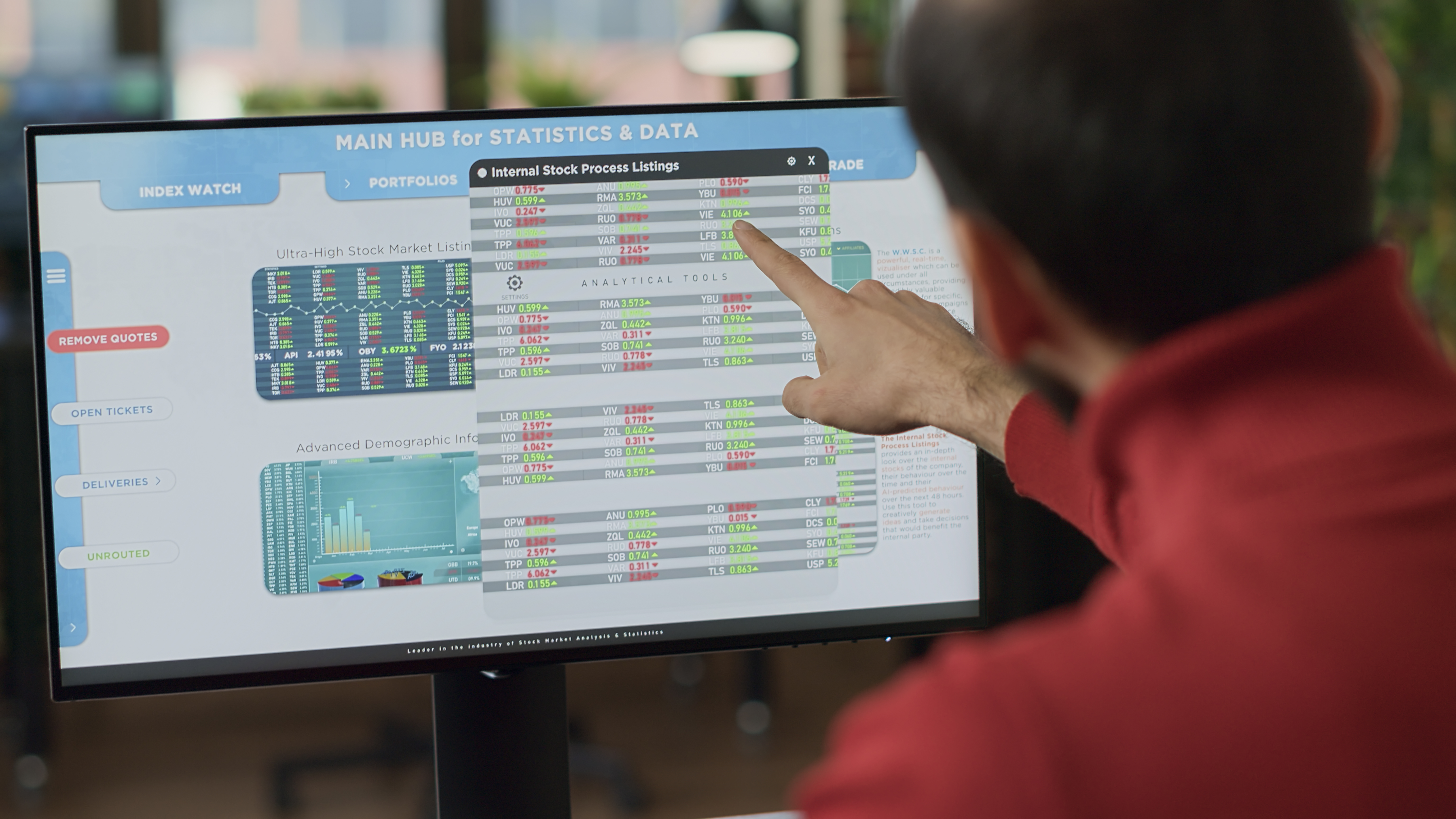

Logistics Planning Software for Exporters: A 4-Step Process
Build the Execution Job
Coordinate Parties and Orchestrate Tasks
Control the Timeline
Manage Exceptions and Hand Off to Logistics Execution
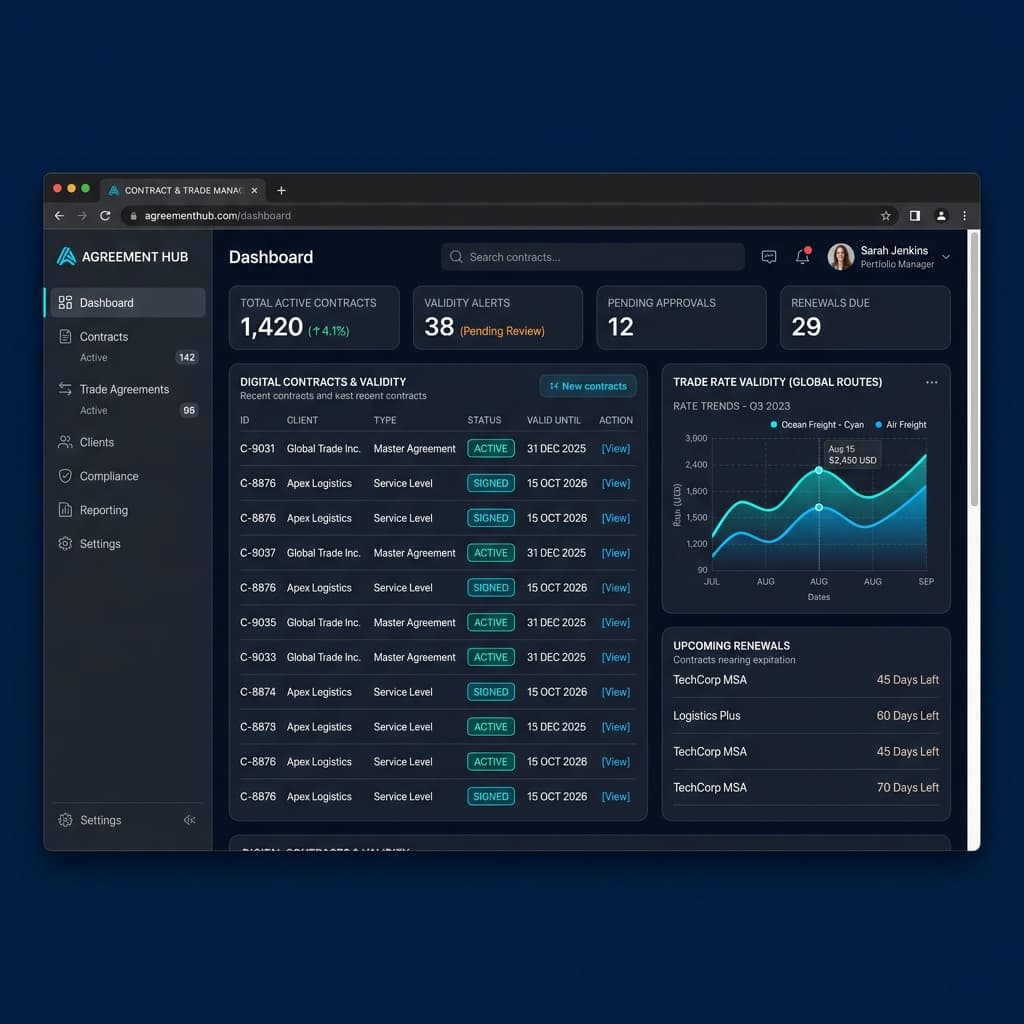
When a nomination is approved and dispatch-ready, CargoClave creates an execution job — pulling all relevant details forward from the nomination automatically. The job captures the commodity, quantity, commercial terms, parties, delivery window, and dispatch brief. Route Planning then structures the full transport sequence: every leg, mode, port, and sequence locked to the job before a single booking is made.
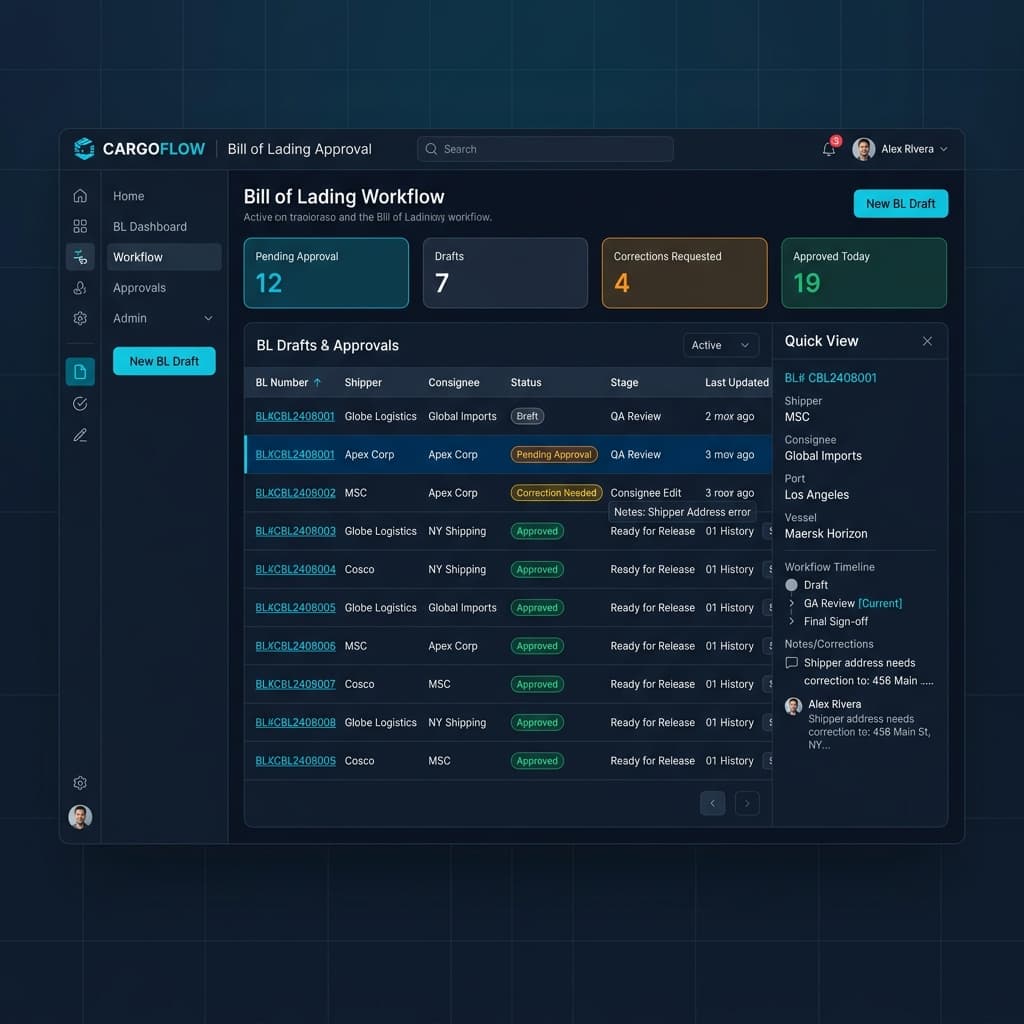
Every logistics party involved in the shipment — freight forwarder, CHA, transporter, surveyor — is connected to the execution job with role-specific access. Every operational task is assigned through Task Orchestration to a named owner in the defined sequence, with a deadline. Every party knows what they own, when it is due, and where the job stands — without a briefing call.
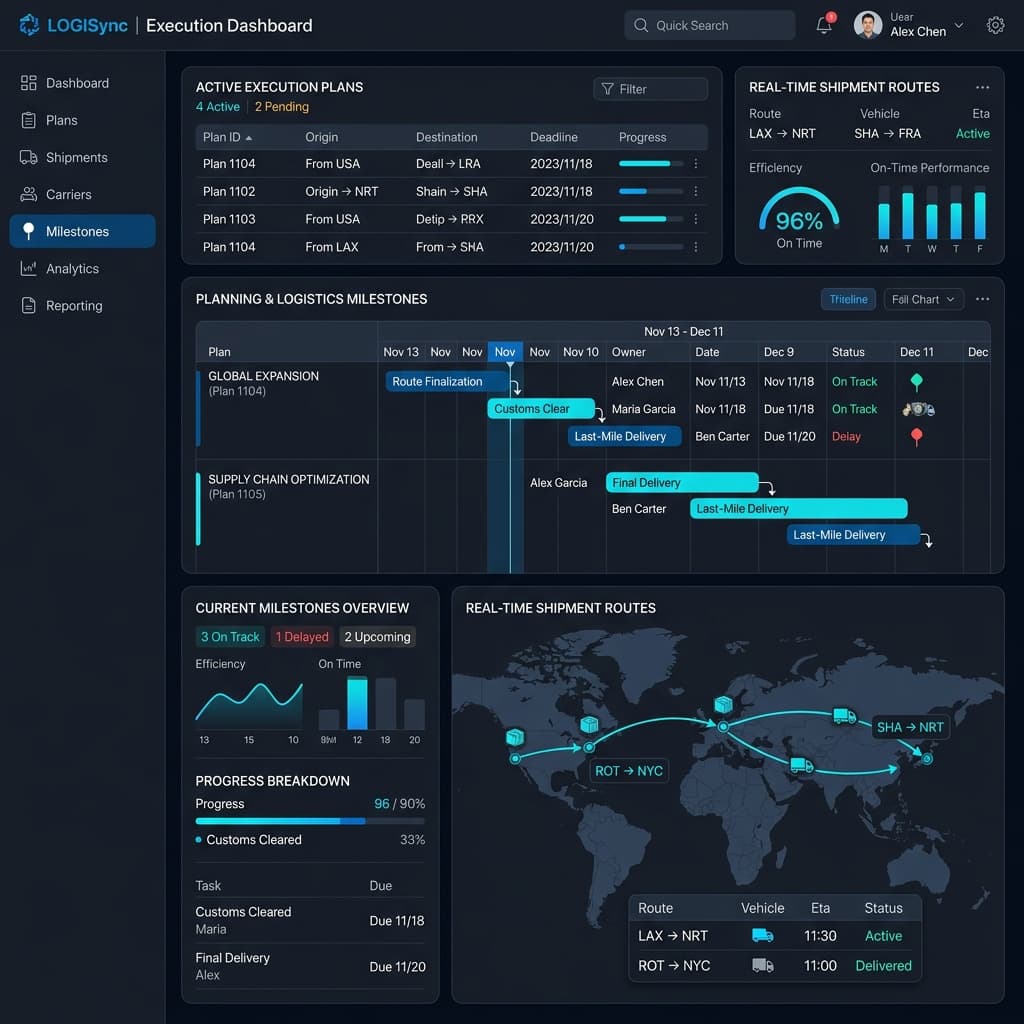
Timeline Control locks the planned dates — stuffing, gate-in, vessel cut-off, ETD, ETA, delivery — to the job and tracks every milestone against them in real time. Alerts fire before deadlines are breached. Operations teams see at a glance which shipments are on track, which are approaching risk, and which milestones need attention — across all active jobs simultaneously.

When a deviation occurs — transport delayed, vessel rolled, loading window changed — Exception Planning captures it as a structured record, assigns a resolution owner, and tracks it to closure. Every exception is resolved through the system, not managed through an escalation call. When the execution plan is complete and all tasks are on track, the job hands off seamlessly to Logistics Execution — with the full route, party assignments, task history, and timeline already in the record.
Export Execution Workflow Software for Every Role
The Structured Layer Between "Nomination Approved" and "Cargo Moving."
Most trade operations do not have a formal execution planning layer. The approved, dispatch-ready nomination goes into a WhatsApp group, a few calls are made, and everyone executes from habit and memory. It works — until the vessel cut-off is tomorrow, the route has not been confirmed, two parties have different information, a task nobody owned is overdue, and the exception to plan B has never been thought through.
CargoClave's Execution Planning module formalises that missing layer into a structured, connected, six-part workflow — so every shipment moves with the same level of control, regardless of who is managing it.
| CargoClave | Traditional Approach | |
|---|---|---|
| Execution job | Structured record built from nomination, all parameters in one place | Forwarded message + verbal briefing to each party |
| Route planning | Full route sequence locked before cargo moves | Decided reactively, leg by leg, as deadlines approach |
| Party coordination | Role-specific access to the shared execution job | Concurrent calls and separate forwards to each party |
| Task orchestration | Named owner + sequence + deadline for every task | Informal assumption about who will handle each step |
| Timeline control | Live tracking against planned dates, alerts before breaches | Status calls to chase progress, discovered late when something slips |
| Exception planning | Structured response process defined at planning stage | Reactive crisis management through escalation and pressure |
Frequently Asked Questions
Why do MSME exporters need an Export Execution Workflow Software?
How does the Export Execution Workflow Software handle delays?
Does the Export Execution Workflow Software support custom task routing?
Ready to Turn Every Nomination Into a Structured Execution Job?
See how CargoClave's Shipment Execution Planning Software plans the route, coordinates every party, orchestrates the tasks, controls the timeline, and structures the exception response — before cargo moves.
No generic demo. We'll walk through your specific execution workflow and show you where each planning layer fits.