
Trade Payment Tracking Software
That Keeps Every Collection Connected to the Shipment
Trade Payment Tracking Software lets you track receivables, manage LCs, control credit, allocate payments, and reconcile banks—all connected directly to the shipment record. Because payment risk starts at the deal, not the invoice.
What Happens When Payment Visibility Is Separated From Shipment Context
Finance Sees the Invoice. Not the Shipment.
The outstanding report shows buyer exposure, but hides crucial context: approaching LC expiries, unresolved partial payments, and unassigned overdue collections.
When finance, operations, and commercial teams track different pieces of the puzzle, no one sees the complete picture.
LC Discipline Disappears After Receipt
An LC is only as valuable as the discipline applied to it. When clauses and amendments aren't continuously tracked against shipment plans, issues arise.
The LC that was supposed to guarantee your payment easily becomes a source of costly discrepancies and delayed collection.
Partial Payments Are Received & Forgotten
Buyers pay 60% of an invoice. Finance records it. The remaining 40% sits open and follow-up ownership quietly disappears.
Without structured allocation, deduction classification, and explicit follow-up ownership, partial payments quickly turn into unresolved legacy balances.
Collections Are Followed Up Until They Are Not
Payment reminders go out, buyers reply with dates, and then those dates pass unmonitored.
When collection relies on personal memory and fragmented email threads, escalations happen too late and cash flow suffers silently before it becomes visible.
UNDERSTANDING THE MODULE
Export Receivables Tracking Software
Export payment tracking software is the financial visibility layer connecting every payment obligation—invoice, LC, credit exposure, and partial receipt—back to the shipment and contract that generated it.
It covers six core areas: receivables tracking, LC management, credit control, partial payment allocation, bank reconciliation, and structured collection follow-up.
For export teams, it's the critical layer that turns completed shipments into collected revenue, providing full visibility at every stage between invoice and closure.
WHAT THE MODULE DOES
Bank Realisation Tracking System & Six Payment Control Layers
Receivables Tracking
Track every receivable from shipment to collection.
Monitor invoice value, due dates, outstanding balances, ageing, and buyer exposure—all connected to the original shipment and document presentation file. Give your teams one shared view of what is collected and at risk.
LC Management
Keep every Letter of Credit under financial control.
Track shipment dates, presentation periods, amendments, and utilization balances across all LC-backed shipments. Flag risk areas like expiry pressure or clause mismatches long before they cause costly bank discrepancies.
Credit Control
Control buyer credit before exposure becomes risk.
Monitor buyer profiles against approved limits and open shipments. Flag limit breaches before the next shipment releases, and route credit exceptions through defined approval workflows to keep releases connected to risk.
Partial Payments
Track every part payment without losing balance control.
Allocate receipts across invoices, classify deductions, adjust advance payments, and assign explicit follow-up ownership to ensure remaining balances are actively managed and never forgotten.
Bank Reconciliation
Match every bank receipt with the right shipment.
Reconcile bank credits with invoices using auto-match support. Handle unmatched receipts through a managed queue, classify forex variances or bank charges, and track reconciliation status until fully closed.
Collection Follow-Up
Turn pending payments into structured follow-ups.
Schedule reminders, log buyer interactions, and monitor promise-to-pay dates from a unified collection board. Route overdue cases through an escalation workflow with a complete, transparent communication history.
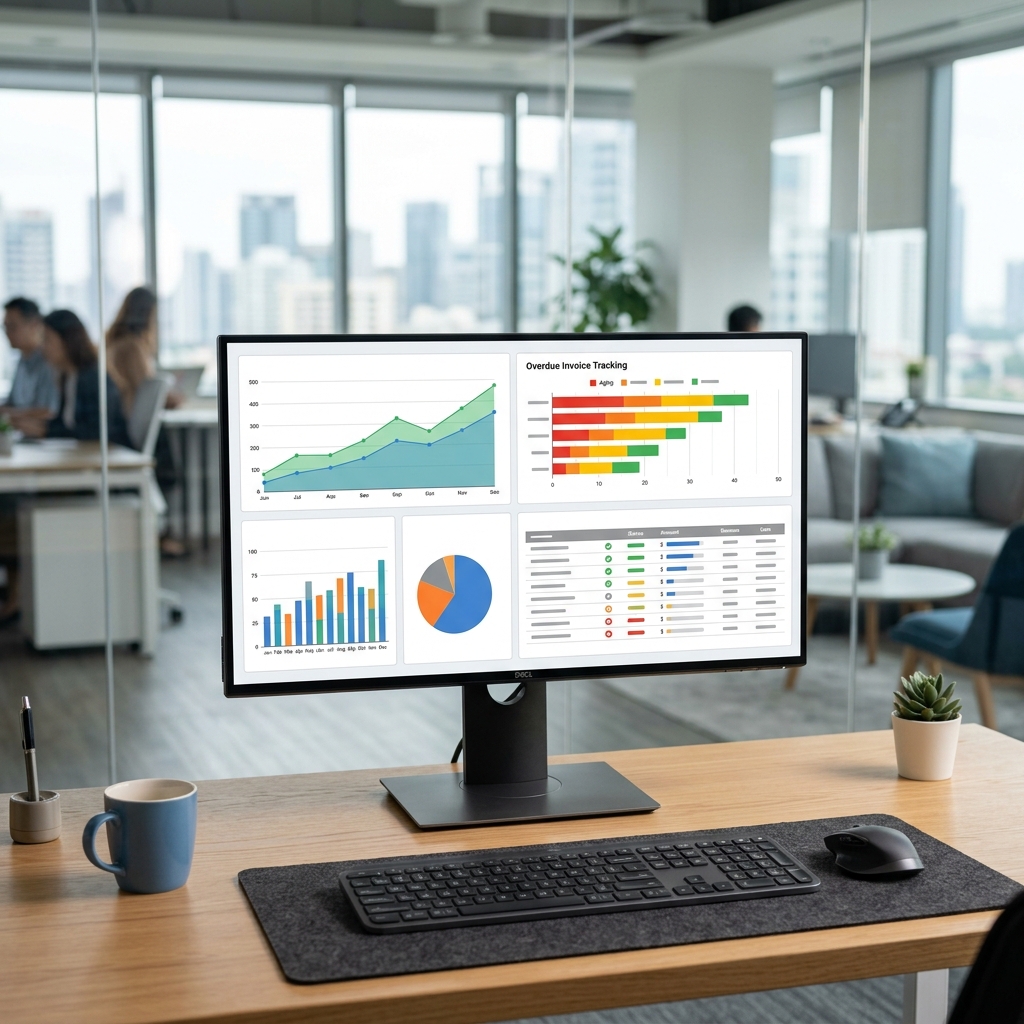





Partial Payment Tracking Software Logistics
Payment File Ready: Receivable Opens
Monitor, Allocate, and Reconcile Receipts
Follow Up Collections With Structure
Close Receivables and Feed Contract Closure

When Document Presentation confirms readiness, the receivable opens. Payment tracking begins immediately from a connected shipment record—activating LC term visibility or credit control checks before proceeding.

As payments arrive, allocate receipts across invoices, classify any deductions, and reconcile bank credits to the right shipment. Finance and commercial teams instantly see updated outstanding balances in real time.

Every open receivable gets a structured recovery process. Assign owners, schedule reminders, log buyer interactions, and monitor promise-to-pay dates. Overdue cases escalate automatically with full context.

Once payment is received, reconciled, and confirmed, the receivable formally closes. This closed payment data feeds directly into Contract Closure, automatically updating the contract's overall financial position.
LC Payment Tracking Tool for Every Team
Payment Tracking Connected to the Shipment — Not Just the Invoice.
A generic accounts receivable tool treats a payment as an isolated transaction against an invoice. CargoClave treats a payment as the financial closure of a shipment—connected directly to the contract, the execution plan, and the documents that generated it.
That connection is what makes payment risk visible before it becomes a payment loss.
| CargoClave | Traditional Approach | |
|---|---|---|
| Receivables tracking | Live dashboard connected to shipment, invoice, ageing, and buyer exposure | Spreadsheets updated manually; ageing reviewed periodically |
| LC management | Structured LC record with clause visibility, utilization tracking, and risk flags | LCs filed in finance; discrepancies discovered only at submission |
| Credit control | Buyer exposure view connected to open shipments with hold workflows | Credit checked informally; exposure estimated from memory |
| Partial payments | Receipt allocation, deduction classification, and active balance tracking | Receipt recorded in ERP; remaining balances lose visibility |
| Bank reconciliation | Auto-match support, deduction mapping, and unmatched receipt queues | Manual bank statement reviews; suspense entries cleared infrequently |
| Collection follow-up | Action board with assigned owners, interaction logs, and promise-to-pay monitoring | Personal emails; escalation only happens when ageing is severely high |
Frequently Asked Questions
How does LC Payment Tracking Tool handle partial payments?
Can LC Payment Tracking Tool reconcile bank advices?
Ready to Connect Every Payment to the Shipment That Generated It?
See how CargoClave's Export Payment Tracking Software keeps your entire collection lifecycle visibly connected directly to your operational shipment records.
No generic demo. We'll walk through your payment collection workflow and show you where each tracking layer fits your team's process.