
How Commodity Agreements Gaps Create Contract Execution and Settlement Risk
Learn how commodity agreements strengthens export-import contract management by improving control over contracts, responsibilities, quantities, documents, payments, risk, and closure - Dive deep into How Commodity Agreements Gaps Create Contract Execution and Settlement Risk.
Introduction
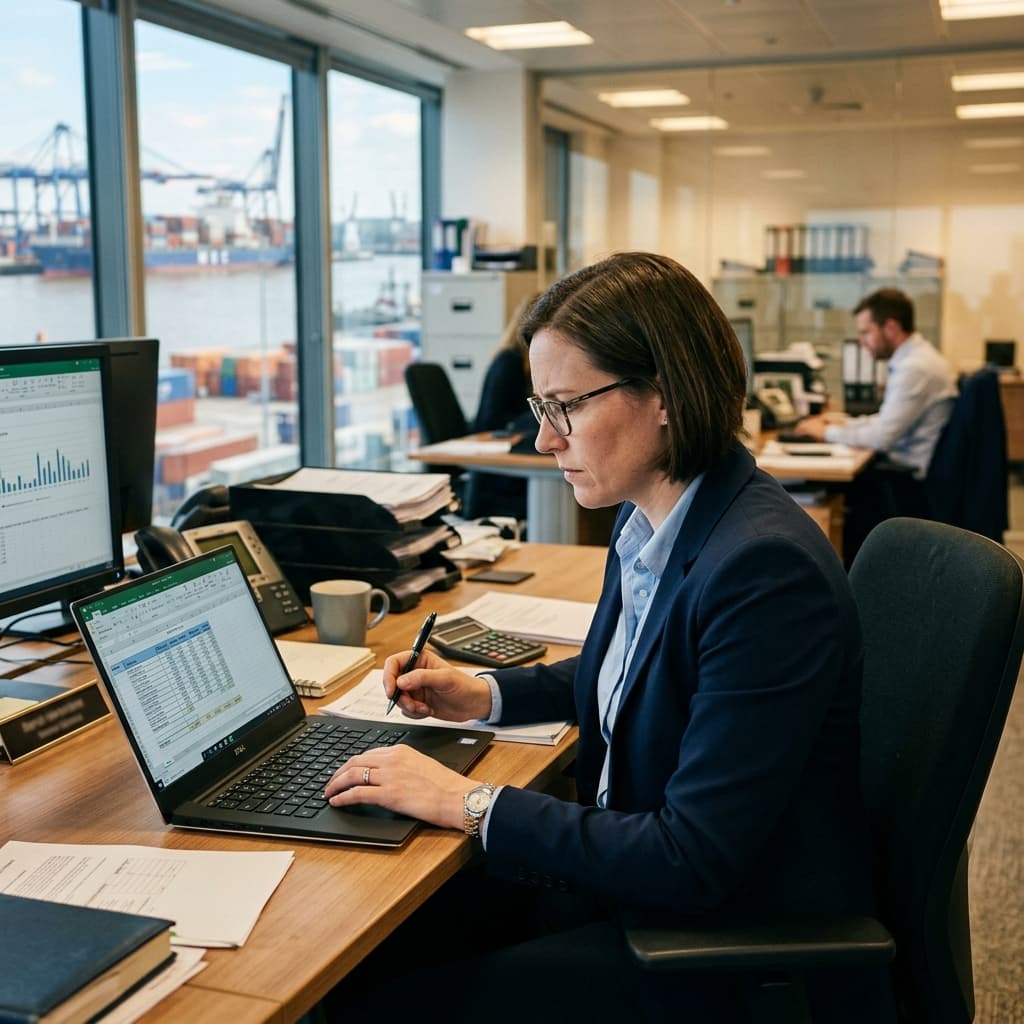
Contract execution risk rarely starts as a dramatic failure. More often, it begins with a small control gap in commodity agreements: an unclear term, an unapproved amendment, a missing quantity rule, a late certificate, a mismatched document, or an obligation that nobody owns.
By the time the issue reaches shipment, finance, buyer documentation, or settlement, the cost is already visible. Teams may face rework, delays, claims, deduction disputes, working-capital pressure, or leadership escalation.
Where Commodity Agreements Gaps Usually Begin
The root cause is usually not lack of effort. Commercial, operations, and finance teams often work hard, but they work from different records. The commercial team may rely on emails, the logistics team may rely on shipment trackers, the documentation team may rely on old templates, and finance may rely on invoice or Tally records. Commodity Agreements becomes weak when these records do not speak to each other.
Common Gap-to-Risk Pattern
| Control Gap | Risk Created |
|---|---|
| Quality specification not captured in structured form | Operational confusion, documentation rework, payment delay, claim exposure, or settlement dispute. |
| Tolerance and lot-wise shipment rules not tracked properly | Operational confusion, documentation rework, payment delay, claim exposure, or settlement dispute. |
| Certificates requested too late for buyer or bank presentation | Operational confusion, documentation rework, payment delay, claim exposure, or settlement dispute. |
| Weight basis differs between contract, invoice, BL, and survey report | Operational confusion, documentation rework, payment delay, claim exposure, or settlement dispute. |
| Market-linked pricing adjustment is not traceable | Operational confusion, documentation rework, payment delay, claim exposure, or settlement dispute. |
How Execution Risk Builds Over Time
A control gap becomes costly because trade execution is sequential. Contract terms influence nominations. Nominations influence shipment planning. Shipment data influences documents. Documents influence customs clearance, buyer acceptance, and bank presentation. Payment and closure depend on everything that came before.
Swipe ↔
The Settlement Risk Connection
Settlement risk is the hidden consequence of weak commodity agreements. A shipment may be physically complete, but if the contract record does not clearly support quantity, quality, price, documents, obligations, and payment triggers, the business may still struggle to close the deal. This is why contract control must be connected to shipment execution and receivables, not treated as a static pre-shipment activity.
Business Impact
| Impact Area | What Happens When Control Is Weak |
|---|---|
| Execution speed | Teams need repeated clarification before releasing nominations, cargo, documents, or payments. |
| Documentation quality | BLs, invoices, packing lists, certificates, and bank documents may not match contract requirements. |
| Working capital | Payment follow-up slows down because document, delivery, or obligation evidence is incomplete. |
| Customer confidence | Buyers lose trust when terms, claims, documents, or quantities are disputed repeatedly. |
| Margin protection | Unplanned freight, demurrage, deductions, penalties, or write-offs reduce deal profitability. |
How to Reduce the Risk
- Create one controlled record for commodity agreements and make it usable by all execution teams.
- Define mandatory fields for quantity, price, delivery terms, documents, payment, responsibilities, and closure logic.
- Route exceptions through approval workflows instead of informal messages.
- Connect contract records to nominations, shipments, documents, certificates, receivables, and closure status.
- Measure gaps through KPIs such as amendment frequency, document rework, late approvals, outstanding obligations, and closure aging.
Technology Angle
A connected platform helps reduce commodity agreements gaps by ensuring that the contract does not disappear after approval. It becomes the reference layer for execution planning, BL validation, certificate readiness, document presentation, payment tracking, and final contract knock-off.
AI and workflow automation can further help by detecting missing fields, comparing documents with contract terms, flagging unusual payment conditions, reminding owners of obligations, and highlighting open exposure before closure.
Conclusion
Commodity Agreements gaps create risk because they travel silently through the entire contract-to-cash lifecycle. The solution is not only better documentation. It is better connected control: clear terms, structured approvals, shared records, owner visibility, and execution evidence that follows the contract from agreement to closure.
FAQs
Why do contract gaps create settlement risk?▼
Can good operations fix weak contract control?▼
Which KPI should leadership watch?▼
What is the best prevention step?▼
Related Resources
Continue reading on this topic

How Shipping Instructions Gaps Create Document Corrections and Buyer Queries
Articles resource on shipping instructions in shipping documentation, covering the specific operating lens behind how shipping instructions gaps create document corrections and buyer queries, field controls, document evidence, team ownership, and digital workflow discipline.
Read More
How Trade Documents Gaps Create Document Corrections and Buyer Queries
Articles resource on trade documents in shipping documentation, covering the specific operating lens behind how trade documents gaps create document corrections and buyer queries, field controls, document evidence, team ownership, and digital workflow discipline.
Read More
How Freight Terms Gaps Create Document Corrections and Buyer Queries
Articles resource on freight terms in shipping documentation, covering the specific operating lens behind how freight terms gaps create document corrections and buyer queries, field controls, document evidence, team ownership, and digital workflow discipline.
Read More