

How Final BL Release Gaps Create BL Correction Cycles and Release Delays
Learn how weak final bl release control creates BL correction cycles, carrier follow-ups, release delays, amendment charges, and customer escalations across logistics operations.
Opening Context
How Final BL Release Gaps Create BL Correction Cycles and Release Delays examines the practical chain reaction created when final bl release is handled through loose emails, informal approvals, or incomplete shipment data. A BL error often starts as a small mismatch, but it can quickly move into correction delays, amendment charges, cargo release issues, buyer escalations, and payment friction. The article focuses on how the gap travels and how teams can stop it earlier.
The Hidden Cost of Poor Control
Most final bl release problems do not begin as dramatic failures. They begin when a draft is forwarded without context, a reviewer assumes another person checked a field, a carrier correction is not acknowledged, or a customer approval is captured outside the main record.
Because final bl release sits between the physical shipment and the document set used for release and payment, a small BL gap can travel quickly. By the time it reaches the buyer, bank, shipping line, destination agent, or finance team, the problem is no longer just a typo; it becomes a delay.
What Happens Inside the Workflow
| Stage | How the Gap Travels | Control Needed |
|---|---|---|
| 1 | Initial gap appears | At the initial gap appears stage, weak final bl release control turns a small document issue into a wider operational dependency. Teams need evidence and ownership before the next handoff. |
| 2 | Draft moves without full context | At the draft moves without full context stage, weak final bl release control turns a small document issue into a wider operational dependency. Teams need evidence and ownership before the next handoff. |
| 3 | Reviewer misses field-level issue | At the reviewer misses field-level issue stage, weak final bl release control turns a small document issue into a wider operational dependency. Teams need evidence and ownership before the next handoff. |
| 4 | Carrier or customer receives incomplete instruction | At the carrier or customer receives incomplete instruction stage, weak final bl release control turns a small document issue into a wider operational dependency. Teams need evidence and ownership before the next handoff. |
| 5 | Revised or final BL remains blocked | At the revised or final bl remains blocked stage, weak final bl release control turns a small document issue into a wider operational dependency. Teams need evidence and ownership before the next handoff. |
| 6 | Release or payment pressure increases | At the release or payment pressure increases stage, weak final bl release control turns a small document issue into a wider operational dependency. Teams need evidence and ownership before the next handoff. |
Why Email Makes It Harder
- Release method mismatch: The customer expects telex release but the line prints originals. The team loses time changing the release approach after vessel sailing. This risk becomes more visible when reviewing final bl release as a process rather than a one-time document check.
- Freight hold discovered late: The BL is approved but the carrier does not release it because payment or credit clearance is pending. This risk becomes more visible when reviewing final bl release as a process rather than a one-time document check.
- Original BL tracking gap: Originals are collected but not logged. Later, finance cannot confirm whether the bank received the complete set. This risk becomes more visible when reviewing final bl release as a process rather than a one-time document check.
- Unauthorized release instruction: A release instruction is accepted from an informal source without proper authorization, creating risk if the buyer disputes cargo release. This risk becomes more visible when reviewing final bl release as a process rather than a one-time document check.
- No final acknowledgement: The document is sent, but the team does not capture bank or customer receipt. Payment follow-up starts without proof of dispatch. This risk becomes more visible when reviewing final bl release as a process rather than a one-time document check.
The most difficult part of final bl release gaps is that they do not always look urgent at the beginning. A missing acknowledgement, unclear field owner, or old draft version can stay hidden until the customer asks for final release or the bank starts checking documents.
Risk Areas by Shipment Type
| Impact Area | What Happens When Control Is Weak |
|---|---|
| Carrier documentation queue | Incomplete or unclear final bl release instructions force the carrier to seek clarification, which increases turnaround time and may push the shipment beyond documentation cut-off. |
| Customer communication | When the team cannot give a clear final bl release status, the customer receives uncertain updates. This reduces confidence even when the shipment itself is moving on schedule. |
| Payment and bank presentation | Incorrect party details, freight notation, shipped-on-board date, or cargo wording connected to final bl release can create discrepancies in LC, CAD, DP, or bank-submitted documents. |
| Destination release | Release method mismatch, missing originals, or delayed surrender instructions inside final bl release can affect cargo availability at destination. |
| Margin and cost control | Late amendments, courier rework, line charges, and unrecovered correction costs created by weak final bl release can quietly reduce profitability on shipments that otherwise look successful. |
| --- | --- |
| Multiple open versions for the same final bl release case | The team should pause and confirm the latest draft before any approval or correction continues in the final bl release workflow. |
| Correction requests with no line acknowledgement | For final bl release, a sent mail or portal submission should be followed by accepted status, ticket number, or line confirmation. |
| Approvals captured outside the record | Any WhatsApp, phone, or informal email approval affecting final bl release should be copied into the workflow with version reference and timestamp. |
| Repeated corrections on the same field | In final bl release, repeated field corrections usually point to unclear source data, weak instructions, or a carrier template issue. |
| Release dependency discovered after final approval | This shows that final bl release correctness and release readiness were not tracked separately. |
Digital Control Layer
- Confirm release method before finalization: The release method should be aligned before the line issues the final BL. Changing from original BL to telex release or sea waybill after final issuance may create extra work, cost, or policy restrictions. In the context of this analytical article, the point shows how final bl release can stop an issue before it becomes a release delay.
- Link release to payment and document terms: LC, CAD, DP, DA, open credit, and advance-payment shipments may need different release controls. Documentation teams should not release originals without understanding the payment condition. In the context of this analytical article, the point shows how final bl release can stop an issue before it becomes a release delay.
- Verify charge clearance early: Freight payment, local charges, and credit holds should be checked before the customer starts asking for the final BL. This prevents last-minute escalation. In the context of this analytical article, the point shows how final bl release can stop an issue before it becomes a release delay.
- Track original movement like inventory: Original BLs should be treated as controlled documents. The team should know how many originals exist, where they are, who collected them, and when they were dispatched or acknowledged. In the context of this analytical article, the point shows how final bl release can stop an issue before it becomes a release delay.
- Close the release trail: Final release is complete only when the carrier release, document dispatch, customer or bank receipt, and internal record status are all updated. In the context of this analytical article, the point shows how final bl release can stop an issue before it becomes a release delay.
A release workflow can connect BL approval, charge clearance, release instruction, original document tracking, carrier confirmation, and bank or customer acknowledgement into a controlled final-release record. In this articles draft, the technology point is applied specifically to final bl release decisions and evidence.
Swipe ↔
Closing Takeaway
Final BL Release gaps are expensive because they move silently until the shipment reaches a deadline. The solution is earlier visibility, stronger ownership, clear correction evidence, and disciplined final-version control.
FAQs
Why do final bl release gaps often create multiple correction cycles?▼
How do these gaps affect customer experience?▼
What is the best early warning signal?▼
How can managers reduce repeated gaps?▼
Why is version control so important?▼
What makes final bl release different from general BL checking?▼
Related Resources
Continue reading on this topic

How Shipping Instructions Gaps Create Document Corrections and Buyer Queries
Articles resource on shipping instructions in shipping documentation, covering the specific operating lens behind how shipping instructions gaps create document corrections and buyer queries, field controls, document evidence, team ownership, and digital workflow discipline.
Read More
How Trade Documents Gaps Create Document Corrections and Buyer Queries
Articles resource on trade documents in shipping documentation, covering the specific operating lens behind how trade documents gaps create document corrections and buyer queries, field controls, document evidence, team ownership, and digital workflow discipline.
Read More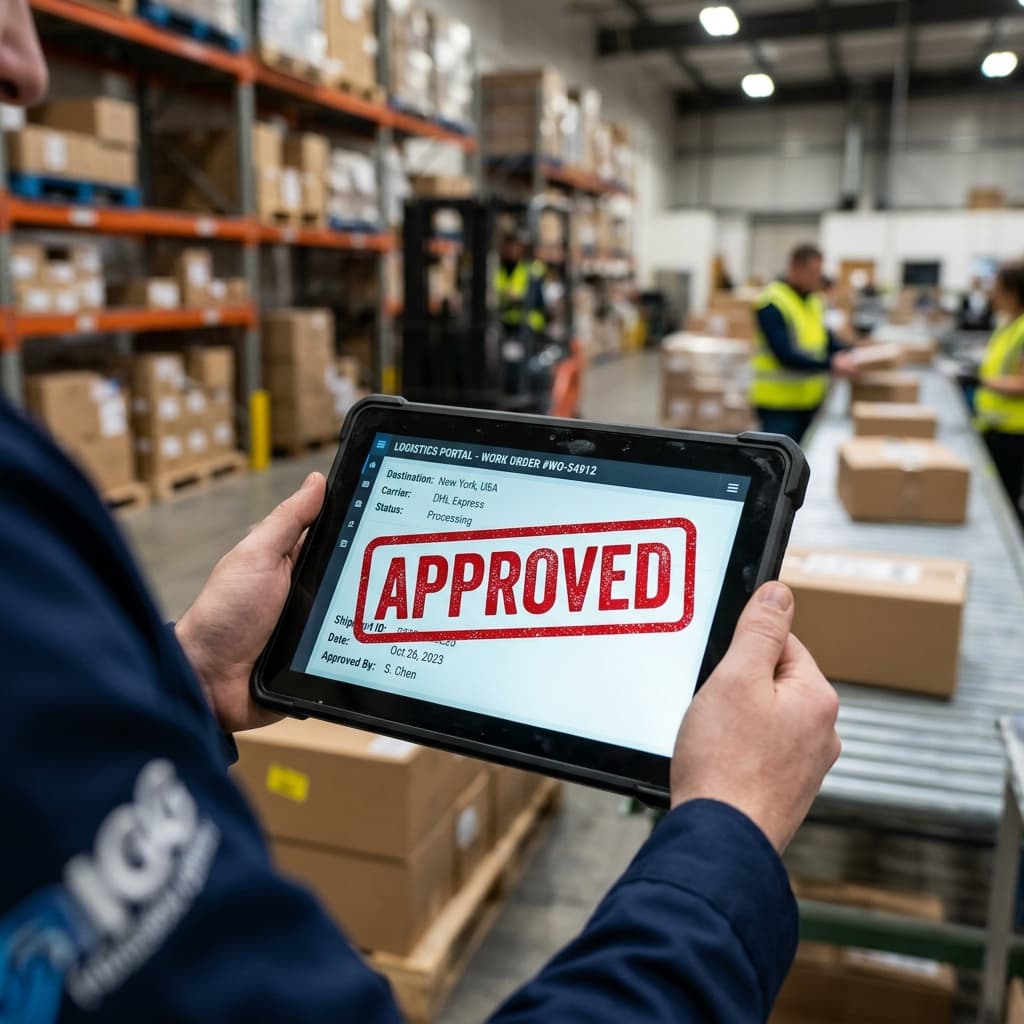
How Freight Terms Gaps Create Document Corrections and Buyer Queries
Articles resource on freight terms in shipping documentation, covering the specific operating lens behind how freight terms gaps create document corrections and buyer queries, field controls, document evidence, team ownership, and digital workflow discipline.
Read More