
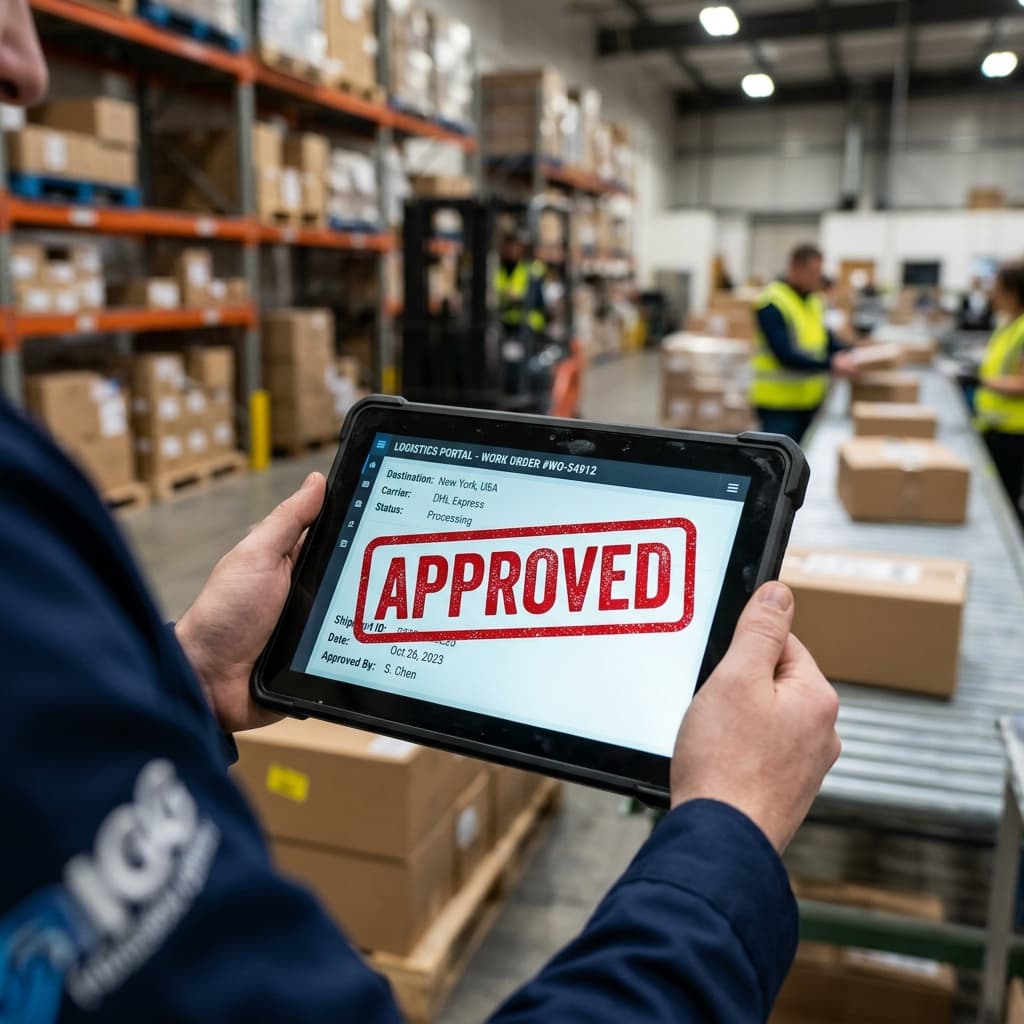
How Unclosed Contract Quantities Create Billing and Settlement Gaps
How Unclosed Contract Quantities Create Billing and Settlement Gaps explained for logistics service providers teams managing contract-to-cash closure, settlement evidence, quantity/payment governance, and audit-ready trade records.
The Operational Problem Behind the Topic
Unclosed contract quantities often look small in operational dashboards, but they can become large when repeated across buyers, commodities, and months. The risk is not only missing revenue. It is the loss of trust between trading, logistics, finance, and customer teams when no one can say whether the contract is actually complete.
The issue usually begins with a partial shipment, tolerance clause, or last-mile weighment difference. If the balance is left as a remark in Excel, finance may underbill, operations may plan another shipment unnecessarily, and leadership may believe the contract has already been settled.
Where the Billing Gap Starts
Billing gaps often start when executed quantity is captured in one place while contract balance is maintained somewhere else. If a shipment is invoiced on one weight basis and accepted on another, the open quantity may remain in the contract even though commercial settlement is practically finished.
The Settlement Consequence
Unclosed quantity makes settlement ambiguous. Finance cannot easily decide whether the buyer owes more money, the seller owes further supply, or both parties have accepted a final tolerance adjustment.
What Leadership Usually Sees Too Late
Leadership often sees the problem only as an aged contract balance. By then, the original shipment team may no longer remember the reason for the difference, and buyer confirmation may be difficult to obtain.
Quantity Closure Risk Signals
| Signal to Watch | What It Usually Means | Action Before Closure |
|---|---|---|
| Contract shows balance after final shipment | Quantity was not knocked off against actual evidence | Reconcile BL, survey, invoice and tolerance before billing closes |
| Invoice quantity differs from survey quantity | Different measurement basis or unrecorded adjustment | Capture measurement basis and commercial acceptance |
| Same balance appears in planning and finance | Operations and finance are not using one closure view | Freeze the balance only after approved disposition |
Technology Angle
Digital closure control helps because it keeps the controlled reconciliation of contracted quantity, nominated quantity, executed quantity, invoiced quantity, accepted quantity, and remaining balance connected to the records that created it. Instead of asking teams to manually assemble proof at the end, the system should collect status, evidence, values, approvals, and exceptions during execution.
For quantity closure, the most useful technology is not a dashboard alone. The workflow needs structured reason codes, evidence links, owner assignment, ageing, approval rules, and drill-down from summary to source transaction.
Quantity Closure Workflow Visualization
Swipe ↔
Quantity Closure KPIs to Track
| KPI | What It Helps Measure |
|---|---|
| open quantity value | Shows the financial value of contract quantity that has not been executed, invoiced, or formally closed. |
| variance outside tolerance | Identifies quantity differences that exceed agreed commercial limits and require approval. |
| average days from final shipment to knock-off | Measures how quickly execution evidence is converted into final contract balance control. |
| contracts with residual balance | Highlights contracts that may look complete but still carry planning or settlement action. |
| quantity dispute ageing | Tracks how long quantity-related disputes remain unresolved after shipment evidence is available. |
Closing Takeaway
The cost of weak quantity closure is rarely visible in one transaction. It appears through repeated leakage, slow settlement, and weaker audit confidence.
FAQs
Why does weak quantity closure become expensive?▼
Is quantity closure mainly an operations issue or a finance issue?▼
What is the earliest warning sign in quantity closure?▼
How can teams reduce this risk?▼
Related Resources
Continue reading on this topic

How Poor Receivable Visibility Impacts Cash Flow in Logistics Operations
Learn how to track shipment-wise receivables, ageing, buyer exposure, collection actions, and cash-flow visibility in export-import operations with practical controls, tables, workflows, and finance-team guidance - Dive deep into How Poor Receivable Visibility Impacts Cash Flow in Logistics Operations.
Read More
How Weak Credit Control Increases Receivable and Shipment Risk
Learn how to manage buyer credit limits, shipment holds, overdue exposure, approvals, and release decisions in export-import operations with practical controls, tables, workflows, and finance-team guidance - Dive deep into How Weak Credit Control Increases Receivable and Shipment Risk.
Read More
How Short Payments and Deductions Affect Receivable Closure
Learn how to track part receipts, short payments, deductions, residual balances, and invoice closure decisions in export-import operations with practical controls, tables, workflows, and finance-team guidance - Dive deep into How Short Payments and Deductions Affect Receivable Closure.
Read More