

What Is Contract Approvals in Export-Import Contract Management?
Learn how contract approvals strengthens export-import contract management by improving control over contracts, responsibilities, quantities, documents, payments, risk, and closure - Dive deep into What Is Contract Approvals in Export-Import Contract Management?.
Introduction
Every export-import contract begins with a commercial promise, but the business outcome depends on how clearly that promise can be executed. Contract Approvals is important because it gives commercial, operations, logistics, documentation, finance, and leadership teams a shared understanding of what has been agreed and what must happen next.
In modern cross-border trade, contract approvals is not a back-office formality. It influences shipment planning, customs readiness, BL accuracy, buyer acceptance, receivables, and final contract closure. When the contract record is weak, downstream teams often spend more time interpreting the deal than executing it.
What Is Contract Approvals?
Contract approvals are the structured reviews and sign-offs required before a trade contract becomes active for execution. They ensure that commercial, financial, legal, logistics, documentation, compliance, and leadership risks are checked before teams start moving cargo.
Approvals protect the business from commitments that look attractive commercially but are weak operationally. A price may be approved, but payment risk may be high. A buyer may be accepted, but required certificates may be difficult. A shipment period may be agreed, but port cut-offs, cargo readiness, or banking terms may not support the promise.
Why Contract Approvals Matters in Contract-to-Cash Execution
Contract-to-cash execution connects commercial agreement, nominations, cargo movement, documentation, payment, and closure. Contract Approvals sits at the start of this lifecycle and shapes everything that follows. It decides what can be shipped, how much can be released, which documents are required, who is responsible for each cost, and when payment can be claimed.
This is especially important in commodity, manufacturing, retail, and export-heavy businesses where one contract may create multiple partial shipments, certificates, claims, amendments, and payment events. A clear contract record reduces interpretation gaps and gives every function the same operating context.
Key Elements of Strong Contract Approvals
- Commercial approval for price, margin, quantity, and customer terms
- Finance approval for credit exposure, payment condition, outstanding amount, and bank charges
- Legal approval for liability, dispute, force majeure, claims, and jurisdiction clauses
- Logistics approval for feasible shipment window, freight responsibility, port, route, and capacity
- Compliance approval for HS code, restricted goods, licenses, sanctions, and required documents
- Leadership approval for exceptions, high-value exposure, unusual terms, and strategic commitments
Typical Workflow
- Draft contract terms are prepared by the commercial owner.
- System routes the contract to relevant approvers based on value, customer, commodity, country, and risk rules.
- Approvers review exceptions, comments, attachments, and pending clarifications.
- Final approval activates the contract for nomination, planning, execution, and documentation.
- Amendments trigger a fresh approval path when risk, value, quantity, or obligation changes.
Swipe ↔
Practical Example
Consider a business handling a high-value commodity contract may need cfo approval before release. The commercial conversation may start with price and quantity, but execution needs much more. Teams need delivery responsibility, quantity tolerance, inspection requirements, document rules, payment timing, and closure logic. If these details are visible only in separate emails, every shipment becomes a coordination exercise.
With better contract approvals, the contract becomes an execution reference. The shipment planner knows the delivery window, the documentation team knows which certificates are mandatory, the finance team knows payment triggers, and leadership can see whether the deal is open, delayed, exposed, or ready to close.
Common Challenges
| Challenge | Business Impact |
|---|---|
| Verbal approvals that cannot be audited later | Creates confusion across execution, documentation, payment, or settlement unless tracked early. |
| Finance or compliance review skipped due to time pressure | Creates confusion across execution, documentation, payment, or settlement unless tracked early. |
| Approvers seeing only a PDF instead of structured risk fields | Creates confusion across execution, documentation, payment, or settlement unless tracked early. |
| Contract amendments executed without fresh approval | Creates confusion across execution, documentation, payment, or settlement unless tracked early. |
| Approval delays that block shipment planning | Creates confusion across execution, documentation, payment, or settlement unless tracked early. |
Best Practices
- Convert contract approvals into structured fields, not only PDF attachments.
- Define owners for commercial, logistics, documentation, finance, and compliance responsibilities.
- Use version control so teams do not execute from outdated terms.
- Link contract terms to nominations, shipment files, BL approval, certificates, and receivables.
- Review contract balances and open obligations before approving closure.
Technology Angle
Digital approval routing gives contract teams defined paths, exception rules, audit trails, and escalation visibility. It helps organizations approve faster without weakening control.
The goal is not to digitize a contract file for storage only. The goal is to make the contract operationally usable so that each shipment, document, approval, claim, and payment can be traced back to the original commercial commitment.
Conclusion
Contract Approvals gives export-import businesses a stronger starting point for execution. When the agreed terms are clear, structured, approved, and connected to operational workflows, teams spend less time reconciling confusion and more time moving cargo, preparing documents, collecting payments, and closing contracts with confidence.
FAQs
What is contract approvals?▼
Why is contract approvals important?▼
Which teams should be involved?▼
How does technology help?▼
Related Resources
Continue reading on this topic

How Shipping Instructions Gaps Create Document Corrections and Buyer Queries
Articles resource on shipping instructions in shipping documentation, covering the specific operating lens behind how shipping instructions gaps create document corrections and buyer queries, field controls, document evidence, team ownership, and digital workflow discipline.
Read More
How Trade Documents Gaps Create Document Corrections and Buyer Queries
Articles resource on trade documents in shipping documentation, covering the specific operating lens behind how trade documents gaps create document corrections and buyer queries, field controls, document evidence, team ownership, and digital workflow discipline.
Read More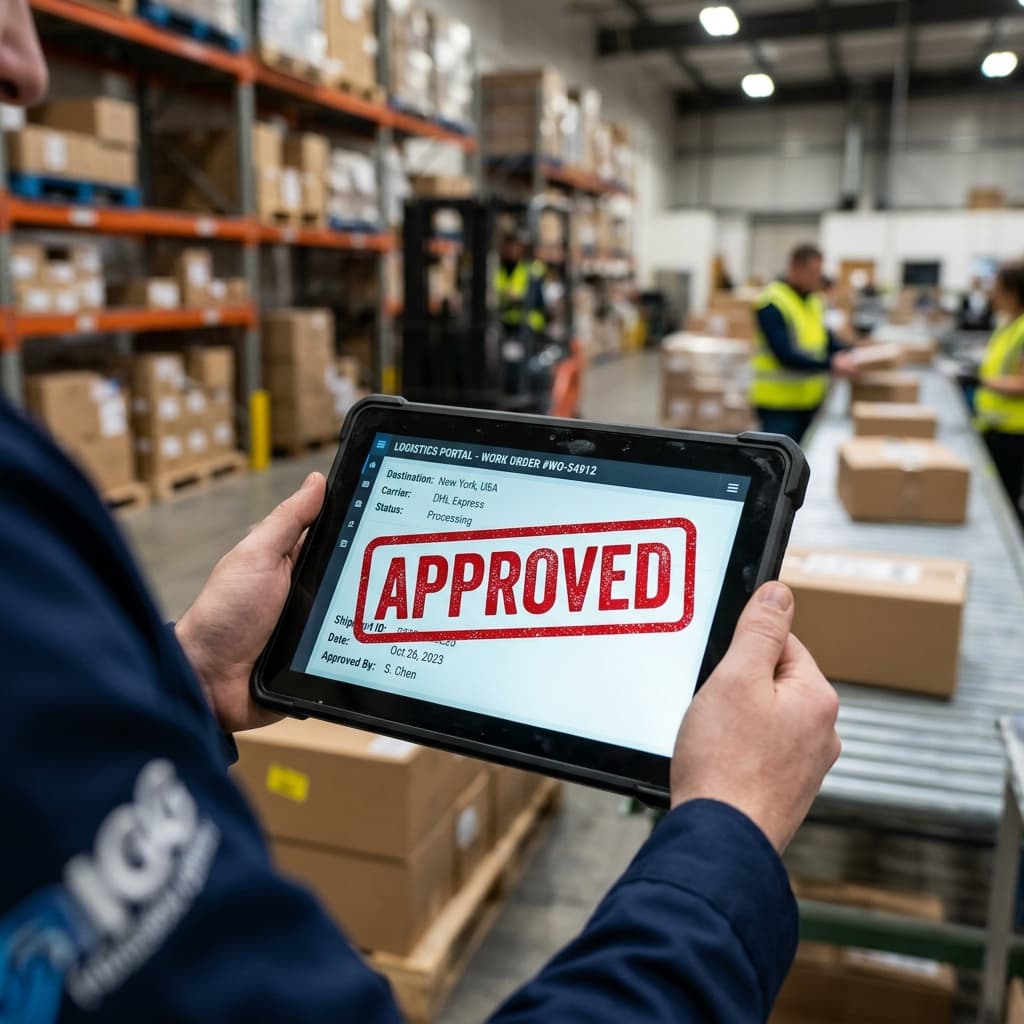
How Freight Terms Gaps Create Document Corrections and Buyer Queries
Articles resource on freight terms in shipping documentation, covering the specific operating lens behind how freight terms gaps create document corrections and buyer queries, field controls, document evidence, team ownership, and digital workflow discipline.
Read More